
From AI Policy to Operational Reality: How Defense AI Acceleration is Reshaping Edge Hardware Design
Six months after the U.S. Department of War (DoW) released its 2026 AI Acceleration Strategy, defense AI is moving rapidly from policy to operational deployment. Engineering teams must now navigate the planning, development, and lifecycle considerations that enable rugged embedded AI platforms to move from concept to operational deployment at the edge without compromising operational requirements.
As of January 2026, the U.S. Department of War’s (DoW) 2026 AI Acceleration Strategy made speed a central priority of defense modernization. In our earlier analysis, we explored how that strategy shifted defense AI toward faster adoption, greater scale, and AI-first operations. Six months later, the impact of that policy direction is becoming more visible in how AI capabilities are being adopted, engineered, and deployed for use in the field.
What Defense AI Acceleration Looks Like Now
Six months after the Department of War introduced its AI Acceleration Strategy, the emphasis on speed is beginning to produce measurable results. What started as a policy focused on removing barriers to AI adoption is increasingly being reflected in deployment activity, infrastructure investments, and the engineering decisions needed to support them.
One indicator of that progress came in June 2026, when the DoW reported that the number of AI users across the department had increased 1,775% over the previous year. During the same period, the administration's National Security Presidential Memorandum (NSPM-11) reinforced the need to accelerate AI adoption while emphasizing rigorous testing, validation, resilience, interoperability, and closer collaboration with industry.
Together, those developments show that AI is becoming more deeply integrated into defense operations while continuing to expand across operational environments.
The underlying infrastructure is evolving as well. The Pentagon's latest plans for the Joint Warfighting Cloud Capability (JWCC) expand support for AI, edge computing, tactical operations, contested communications environments, and resilient cloud-to-edge architectures. Those investments recognize that accelerating AI is not simply about developing more capable software. It also requires the computing platforms, networking, and supporting infrastructure needed to deliver AI where military operations occur.
For organizations developing embedded AI-ready systems, those changes raise a practical engineering question: How do you accelerate deployment without compromising the performance, reliability, and long-term support expected of defense systems?
One way to understand that challenge is by examining how AI acceleration influences planning, development, and lifecycle decisions. Each shapes how quickly edge AI systems can move from concept to mission-ready operations.
Why Defense AI Acceleration Starts with Clear Hardware Requirements
Accelerated AI adoption places more pressure on early hardware planning because incomplete requirements can slow every stage that follows. Questions that once had months to be resolved may now require answers sooner because uncertainty can slow everything that follows.
That doesn’t mean rushing decisions or forcing every AI workload into the same hardware architecture. It means reducing ambiguity fast enough for development to begin on schedule.
Defining Edge AI Workloads Before Architecture Decisions Begin
Teams need a clear understanding of the application and edge AI workloads to build a system that can perform the mission today while supporting the growth that may come next. That planning includes understanding workload characteristics, expected sensor inputs, I/O requirements, and lifecycle expectations before architectural decisions are made. Those considerations establish the foundation for development and long-term platform support.
Strategic planning reduces ambiguity. When defense and engineering teams establish a shared understanding of what the system must do and how it will be supported, the easier it becomes to move forward faster.
When requirements are unclear or stakeholders aren’t aligned, engineering teams spend valuable time revisiting decisions that should have been answered earlier. A platform intended for transport or remote edge deployment may face environmental and operational requirements that can’t be easily corrected after development begins. Understanding those conditions early helps teams evaluate tradeoffs before they become design constraints.
With well-defined workload requirements and deployment expectations, engineering teams can focus on building the platform instead of revisiting planning decisions.
Rugged Edge AI Systems Must Balance Compute Performance, SWaP, and Environmental Demands
Faster delivery expectations may hasten the path to deployment, but they don’t reduce the operational requirements an embedded AI platform must satisfy. As AI capabilities move from development to operational deployment, engineering teams are being challenged to support increasingly demanding edge AI workloads.
Engineering teams are working to field AI-enabled capabilities for workloads that would’ve been considered ambitious for edge deployments only a short time ago. Delivering that capability requires more than a powerful processor. Design decisions, from processor selection to thermal management, can influence everything from power consumption to enclosure design. Engineering teams balance those competing priorities throughout development.
A processor that performs well in the lab still has to survive the demanding environment in which it’ll operate. An AI system mounted inside a military vehicle must be stable enough to withstand shock and vibration during operation. Size, weight, and power (SWaP) factors must be configured for fanless operation in limited spaces. The enclosure has to protect against environmental intrusions.

Validation Planning Helps AI-Ready Defense Platforms Move Faster
Even then, a functioning prototype doesn’t ensure validation, and defense organizations expect proof that a rugged system can perform as intended at the edge. Sealevel Systems uses a design for certification approach, carefully evaluating product applications to ensure all I/O, processing, environmental, safety and security requirements are met. Sealevel's engineering team has direct experience designing to meet demanding military and environmental standards, including:
- MIL-STD-810
- MIL-STD-461
- MIL-STD-1472
- MIL-STD-901
- MIL-STD-464
- MIL-STD-167-1
Engineering success depends on how well today's deployment accommodates tomorrow's technology. AI software development is outpacing traditional development cycles, increasing the likelihood that platforms will need to support new capabilities over time. A reliable platform satisfies current requirements while remaining positioned for future compatibility and upgradeability throughout its lifecycle.
Modular Embedded Architectures Help Defense AI Systems Keep Pace with Change
AI technology does not remain static after deployment. The hardware and software ecosystem continues advancing, creating opportunities for greater performance while increasing pressure on existing platforms to keep pace. That is why hardware architecture matters so much to AI acceleration: the more modular and adaptable the platform, the easier it becomes to field new capabilities without restarting the entire engineering process.
Defense organizations don’t want to redesign and requalify an entire platform every time computing technology advances. The cost, effort, and schedule implications can quickly outweigh the benefits of the upgrade itself. As a result, it is critical for engineering teams to adopt a design-for-change mindset that preserves flexibility for the future and enables longevity.
The goal isn't to predict the next AI breakthrough, but rather to avoid starting over when it arrives.
Modularity is one example. Open architecture and standardized interfaces can provide opportunities to incorporate future technologies without disrupting an entire platform. By emphasizing modularity and interoperability, these frameworks can make it easier to incorporate future capabilities without requiring an entirely new platform.
Sealevel's Relio R1 HPC+ illustrates this design-for-change philosophy through its next-generation COM-HPC architecture, providing scalable performance, faster data transfer, and broad compatibility for future-ready edge deployments. That approach gives engineering teams a practical path to incorporate future compute technologies while preserving much of the engineering work that's already been completed.
Designing for Future AI Models, Sensors, and Mission Requirements
Preserving engineering flexibility is only part of the equation. The platform itself also needs room to grow. Capacity that appears unnecessary during product evaluation may become valuable as AI models become more demanding and mission requirements expand over time. An architecture selected today may eventually be expected to support capabilities that have not yet been defined.
Design-for-change strategies cannot predict future functions, but they can create room to accommodate them while reducing the possibility that a successful platform becomes obsolete before its service life is complete. As AI models become more sophisticated and new sources of information are introduced, systems must be able to absorb those demands without requiring a completely new foundation.
The result is an environment where more data can be collected, processed, and delivered to soldiers for faster threat evaluation.
Engineering is Where Defense AI Strategy Becomes Operational Capability
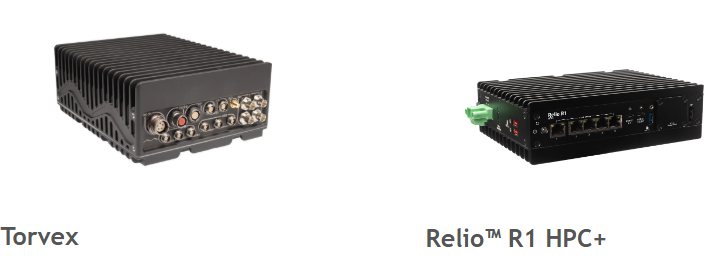
Those engineering principles are no longer theoretical. They're already shaping the embedded AI platforms being deployed today. Sealevel's Torvex AI Computer is one example, combining rugged system design with the computing capability needed for demanding edge AI workloads.
As more AI-ready platforms like these reach the field, the benefits are becoming easier to see. The Army recently highlighted one example in defensive cyber operations, where AI is helping soldiers collect growing volumes of information faster so they can spend less time searching for threats and more time evaluating them.
Operational gains like that start before deployment.
The speed seen in today's operations is ultimately built on engineering decisions made long before the first AI model reaches the field.
Frequently Asked Questions
1. How is defense AI acceleration changing hardware engineering requirements?
AI acceleration shortens the time available to move systems from development to deployment, but it does not reduce operational requirements. Engineering teams must still balance compute performance, environmental durability, validation, and lifecycle support, while delivering AI-ready platforms on accelerated schedules.
2. Why do AI-ready defense platforms need clear hardware requirements early?
Planning establishes the engineering foundation for development. When mission requirements, deployment conditions, and lifecycle expectations are clearly defined early, teams can make informed architectural decisions and reduce costly redesigns later in the program.
3. Why are modular embedded architectures important for military AI systems?
Modular architectures make it easier to introduce future technologies without redesigning an entire system. By separating compute from the broader platform architecture, engineering teams can accommodate evolving AI capabilities while preserving previously validated designs.
4. What does "design-for-change" mean in rugged edge AI systems?
Design-for-change is an engineering approach that prepares a platform to accommodate future technologies and mission requirements. Rather than predicting every future need, it creates enough flexibility to support capability growth without starting from scratch.
5. How do SWaP, thermal design, and environmental requirements affect AI-ready platforms?
AI-ready platforms require more processing capability, but additional performance also increases demands on power delivery, heat dissipation, and system design. Engineers must balance these factors while ensuring the platform can operate reliably in the intended deployment environment without compromising ruggedness, size, or long-term performance.
6. How does rugged embedded computing help move AI from strategy to operational deployment?
Embedded computing provides the rugged, reliable hardware foundation that allows AI capabilities to move from development into operational use. Well-designed platforms also give defense organizations a practical path to adopt future AI technologies without rebuilding systems from the ground up.
Categories: