
Why Industrial Connectivity Gets More Complicated Over Time, and How to Control It
As industrial embedded computer systems grow, new connections, devices, and communication requirements can create unexpected complexity. Here's why connectivity sprawl happens and how organizations can control it through interoperability, integration, and architectural planning.
Connectivity sprawl rarely arrives all at once. It happens one project at a time: another gateway, adapter, protocol converter, or edge appliance mounted wherever space remains.
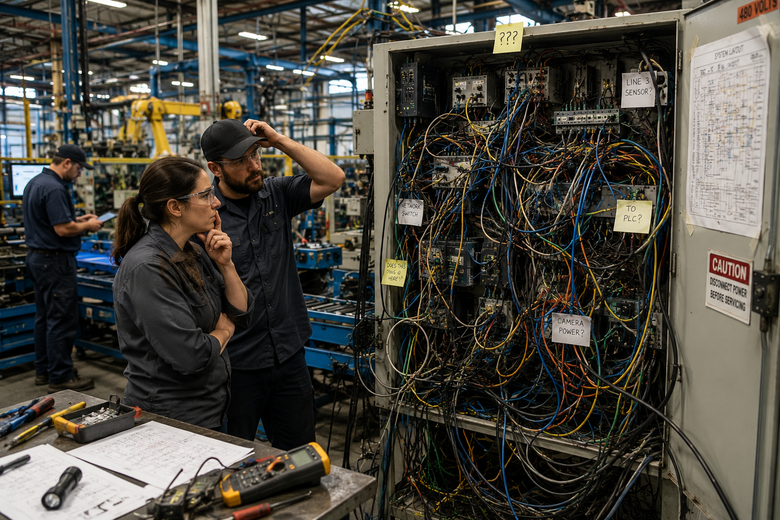
Then one day, you discover nobody knows which cable controls what. Nothing’s been labeled and there’s no diagram. What was once a straightforward system is now harder to troubleshoot, maintain, and expand.
But complexity doesn't end there.
New connections continue to be added to industrial systems as organizations expand automation, remote monitoring, industrial Ethernet communication, and data collection. While each addition solves a problem, each can also create new dependencies.
Organizations must proactively manage the operational complexity that comes with industrial connectivity. Connectivity becomes more complicated when new capabilities are added without considering how they fit into the overall architecture. That makes planning for system integration increasingly important as operational requirements change. As infrastructure expands, interoperability and simplification are essential for controlling sprawl.
How Connectivity Sprawl Happens
Connectivity sprawl develops gradually as systems expand and new devices are connected.
An organization may deploy a new monitoring capability. Months later, a machine is connected to the network so operational data can be collected. A future project introduces equipment that doesn't communicate with the existing infrastructure. Additional hardware is needed to bridge the gap. Each change solves a real problem, and each decision makes sense at the time.
However, the architecture becomes increasingly dependent on supporting hardware that was never part of the original design. Infrastructure is seldom rebuilt when new capabilities are added. Existing systems remain in place because they still work and deliver value. As a result, new technology is often added around them rather than replacing them.
When Infrastructure Starts Driving the Design
The effects may be subtle at first. A few extra devices don't seem significant. A few additional cables are easy to ignore. Complexity accumulates until troubleshooting takes longer than expected, upgrades become difficult to plan, or nobody is entirely certain how a particular device was integrated into the system.
Eventually, those challenges begin affecting day-to-day operations.
A car wash kiosk provider encountered this challenge while expanding the capabilities of its point-of-sale platform. What began as a functional design eventually relied on multiple computers and external devices to support new requirements. The architecture worked, but it consumed valuable space and became more difficult to manage.

To simplify the system architecture, the company adopted Sealevel's Flexio integrated computing platform, consolidating functionality into a single system. The result reduced hardware complexity and freed space within the enclosure. As is often the case, the connectivity itself wasn't the problem; the growing infrastructure surrounding it was.
Simplifying Interoperability Without Starting Over
Organizations may not have the luxury of starting over. The embedded systems creating today's connectivity challenges are often the same systems organizations rely on to keep operations running. Replacing them isn't always practical. Existing equipment may still perform its intended function reliably, even if it was never designed to communicate with newer technologies.
As operational requirements change, organizations often find themselves connecting systems from different eras. A machine that’s been running for years may need to share data with a modern analytics platform. New monitoring capabilities may need to be added to equipment already in service.
In some cases, a simple interface upgrade can affect multiple parts of the architecture. The resulting challenges can extend well beyond the initial project scope. That reality requires a different approach to integration.
Successfully Planning for Interoperability
The objective is to allow communication without creating new layers of complexity in the process.
That can be easier said than done. When interoperability is addressed one project at a time, teams may solve each challenge independently. Each decision may be justified, but the cumulative effect can be difficult to manage.
Organizations that control connectivity sprawl look beyond the immediate problem. Instead of asking how to connect two systems, they ask how a new capability fits into the broader architecture. The answer may still involve new hardware or software, but the goal is to create well-defined communication paths that are easier to maintain, document, and scale.
The most effective interoperability strategies simplify systems rather than adding new layers around them. When efforts reduce integration overhead and eliminate unnecessary infrastructure, organizations gain more than connectivity. They build systems that can grow without becoming harder to manage.
Integrated Connectivity at the Edge
Connectivity continues to expand. A single edge deployment may need to communicate with cameras, sensors, controllers, cloud services, and other operational systems at the same time. Teams working on integration aren’t just connecting one device to another. They’re managing the growing number of connections required to support modern operations.
Supporting More Connections Without More Complexity
Historically, adding a new connection often meant adding another device. As connectivity demands increased, so did the supporting infrastructure. Today, many organizations are looking for ways to accommodate more communication pathways without continuously expanding.
A more integrated approach supports different connectivity requirements within a well-defined architecture. Modern edge platforms, for example, may combine multiple Ethernet ports, wireless communications, high-speed interfaces, and legacy connectivity options within a single system. This allows organizations to connect more devices and move more data without continually adding new layers of supporting infrastructure.

This shift is reflected in newer edge platforms such as Sealevel's Relio R1 HPC+, which combines high-speed networking, wireless communications, modern USB interfaces, and support for existing infrastructure within a single platform. The system's five 2.5 Gigabit Ethernet ports alone allow engineers to support multiple cameras, sensors, and networked devices from a single computing platform.
A public security system manufacturer ran into a similar situation. Its application relied on numerous motors and sensors spread throughout the system, creating substantial connectivity requirements.
Instead of continuing to add hardware to support those connections, the company moved to a Relio-based platform that brought the required I/O into a single system. The approach simplified the architecture while still supporting the demands of the application.
Planning for Growth Without Sprawl
Connectivity sprawl is often viewed as an engineering inconvenience. In reality, it can become an operational liability. As infrastructure grows more difficult to understand, organizations spend more time troubleshooting, maintaining supporting hardware, and working around limitations that accumulated over years of incremental change.
The consequences extend beyond the engineering team. Systems often outgrow their original expectations. As they do, they become harder to support, more difficult to modernize, and increasingly crowded with the infrastructure needed to keep them running.
Research shows that aging technology environments can hinder efficiency and consume resources that could otherwise be directed toward improvement and innovation. Organizations that prioritize interoperability, integration planning, and thoughtful architectural planning are better positioned to expand capabilities without creating the infrastructure sprawl that often follows.
Frequently Asked Questions
What is connectivity sprawl?
Connectivity sprawl occurs when new devices, communication pathways, and supporting infrastructure are added over time without a coordinated architectural plan. What begins as a series of practical decisions can eventually create systems that are difficult to understand, maintain, and expand.
Why does industrial connectivity become more complicated over time?
Industrial connectivity becomes more complicated as organizations add new capabilities, connect additional equipment, and integrate technologies from different generations. Existing systems often remain in service because they continue delivering value, which means new technology is frequently added around them rather than replacing them.
How can organizations reduce connectivity sprawl?
Organizations can reduce connectivity sprawl by taking a broader view of system architecture rather than solving each integration challenge independently. Effective planning, interoperability strategies, and well-defined communication paths help support new capabilities without continually adding complexity.
What role does interoperability play in industrial connectivity?
Interoperability allows systems from different eras, vendors, and technologies to communicate effectively. When approached strategically, interoperability helps organizations integrate new capabilities without creating additional layers of supporting infrastructure.
Why is reducing connectivity sprawl important?
Connectivity sprawl can increase troubleshooting time, complicate upgrades, consume valuable space, and make systems more difficult to support over time. Organizations that prioritize integration planning and architectural simplicity are better positioned to expand capabilities without creating infrastructure that becomes increasingly difficult to manage.
Categories: