
Engineering Edge AI Platforms for Long-Term Performance
The race to deploy AI at the edge is exposing a critical truth: most systems weren’t designed with AI in mind.
According to the 2026 State of AI Infrastructure Report, from Vanson Bourne, commissioned by DDN in partnership with Google Cloud and Cognizant, 92% of IT and business leaders noted their infrastructure wasn’t prepared to support AI and 54% had delayed or cancelled projects in the past two years. The report reflects a central challenge for rugged hardware designers: change is inevitable, and in the era of AI, it arrives faster than most systems were built to handle.
Hardware can take years to evolve, but AI software is advancing in months. Platforms deployed today can become downtime risks if the underlying hardware can’t accommodate evolving compute density, power efficiency, and data throughput required for modern AI workloads. Poor planning during design creates problems that may only surface after deployment, when redesigns are expensive and operational disruption is unavoidable.
Engineering for change is the most effective form of downtime prevention. Component choices that cannot sustain long lifecycles, thermal designs validated only in controlled settings, and rigid integration approaches are not isolated mistakes. They are early decisions that compound over time.
A strong foundation begins with five engineering decisions that can determine whether an edge AI deployment becomes a long-term asset or a short-term liability. Teams that strategically plan for them upfront build platforms that adapt as AI advances. Teams that do not plan may face preventable downtime, redesign, and disruption later. The cost of reacting to change is always higher than planning for it.
5 Engineering Decisions that Shape Long-Term Edge AI Performance
How Early Design Choices Determine AI Readiness
Understanding how early engineering decisions work together, and planning for them as an integrated system rather than isolated features, determines whether an edge AI platform remains adaptable or becomes a source of disruption. Engineering for change shapes how platforms evolve over time, allowing organizations to absorb AI-driven shifts in silicon, power demand, and integration requirements without incurring avoidable downtime or cost escalation.
The following decisions and the discipline behind them shape both initial AI readiness and long-term operational continuity.
Decision 1: Component Life-Cycle Planning
Anticipate Component Lifecycle Disruption to Prevent Full Redesign
Edge AI platforms fail when component suppliers shift priorities or rigid architectures cannot accommodate newer processors. The recent DDR4 RAM shortage illustrates this pressure. Some manufacturers shifted production focus to DDR5 for AI data centers, tightening supply for platforms that still rely on the older memory standard. With AI workloads projected to grow 227% at the edge, according to the report, pressure on hardware to evolve will only intensify.
Component lifecycle planning addresses this risk by selecting parts with extended availability windows and establishing supplier relationships that provide advance notice of end-of-life (EOL) transitions. Sealevel reinforces this discipline by tracking component lifecycles using tools such as SiliconExpert, analyzing EOL forecasts, compliance data, and supplier health before parts are selected. This holistic view of the global supply chain enables engineering teams to anticipate shortages and adjust designs before disruptions impact production.
When discontinuation becomes unavoidable, modular architectures limit disruption by enabling adaptation without full system redesign. Modular designs built around computer-on-module cores create stable foundations. Operating systems, drivers, and board support packages (BSP) remain reusable even as silicon generations evolve and underlying hardware changes. This approach supports the long program lifecycles common in aerospace and defense, where systems must operate for decades while components and suppliers shift.
Decision 2: Integration with Existing Infrastructure
Flexible I/O Architecture Enables Edge AI Integration Without Replacing Legacy Systems
New AI-ready platforms may hit roadblocks when they can’t integrate with equipment already in place. According to the report, 65% of organizations acknowledged challenges tied to legacy systems and the inability to scale.
Industrial, aerospace, and defense environments rarely operate on clean slates. Sensors, controllers, and monitoring systems often span decades and rely on different communication standards. Legacy equipment may depend on serial protocols, while modern platforms operate over Ethernet and IP-based networks. When edge AI systems cannot bridge these differences, organizations may have to replace functional infrastructure prematurely or introduce complex middleware to translate between systems.
Flexible I/O architectures address this risk by supporting multiple communication standards within a single platform. This enables edge AI systems to ingest data from legacy serial devices while simultaneously connecting to modern networks and AI accelerators. Sealevel designs platforms with diverse analog and digital I/O. Those platforms, alongside modern network interfaces, bridge legacy and modern communication standards, help prevent premature infrastructure replacement.
In one integration project, a systems developer replaced an EOL embedded platform with a Flexio system. The new platform supported varied I/O requirements across multiple applications, simplifying deployment and reducing custom integration work.
Platforms engineered with versatile I/O from the outset reduce integration friction, preserve prior infrastructure investments, and allow AI deployment without disrupting systems that still perform reliably.
Decision 3: SWaP-C² Optimization
SWaP-C² Optimization Sets the Sustainable Performance Ceiling for Edge AI
SWaP-C² factors—size, weight, power, cost, and cooling—define the operating limits of every edge AI platform. AI workloads compress those limits simultaneously. Inference requires significant computational power, concentrated at high density within compact systems where cooling options are limited.
Edge AI inference shifts power demands rapidly and unpredictably. Processors can swing from low utilization to peak current draw within milliseconds. That creates localized thermal spikes that must be dissipated quickly to prevent thermal throttling or failure. In sealed, rugged enclosures required for harsh environments, traditional cooling methods such as fans or liquid loops introduce unacceptable reliability risks.
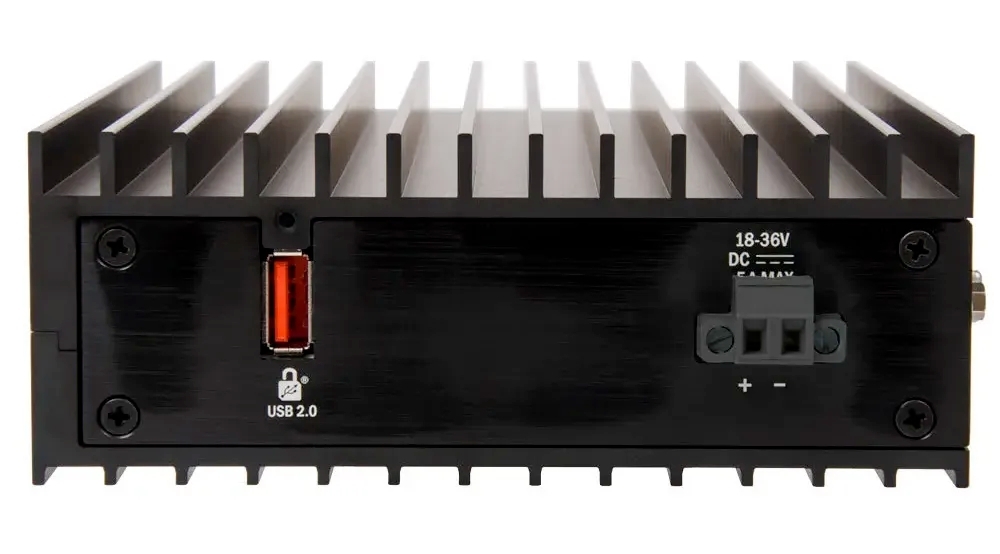
Rugged computer enclosure with fins for heat dissipation.
Platforms engineered with thermal performance as a primary requirement sustain stable operation under continuous AI workloads. Conduction cooling through engineered heat paths and external dissipation features, like fins, removes heat without moving parts, improving reliability. However, conduction requires deliberate thermal design because every watt saved in power regulation is one less watt of heat to remove.
SWaP-C² optimization reveals the core tradeoff. Increase compute performance and something else—physical footprint, thermal capacity, or budget—must give. Addressing power regulation and thermal management from the start determines how much performance the system can sustain over time within those constraints.
Sealevel builds platforms with SWaP-C² constraints addressed at the beginning, integrating power regulation, thermal paths, and enclosure design as a unified system. Compute capability is matched to what can be sustainably powered and cooled within the intended environment. Sealevel’s IP67-rated AI computer, built around the NVIDIA Jetson Orin AGX Industrial module, sustains high-performance inference workloads in sealed, fanless deployments from -40°C to 71°C without thermal throttling or reliability tradeoffs.
Decision 4: Enclosure Design
Enclosure Engineering Protects Performance and Extends Edge AI Operational Life
Edge AI platforms deployed in industrial, defense, and energy locations must withstand heat, vibration, shock, and the environment, conditions that reveal the limits of conventional embedded systems. Rugged enclosure engineering protects internal components from mechanical stress and contamination while sustaining stable operation over time.
Effective rugged enclosure design integrates several interdependent elements. Structural reinforcement absorbs shock and vibration, while material selection balances durability and weight. EMI shielding blocks interference from external electromagnetic sources, and integrated thermal paths move heat away from sensitive components. Sealing addresses a different threat, preventing the ingress of dust, moisture, and other contaminants that would compromise hardware.
Sealing is quantified through ingress protection ratings such as IP and NEMA standards, which define resistance to environmental intrusion. This becomes critical in washdown, submersion, or high-particulate environments. Not every enclosed system is sealed to the same degree, and sealing alone does not make a system rugged. It must work in concert with structural, thermal, and shielding elements.
Fanless, enclosed architectures eliminate moving parts that introduce failure risk but require deliberate thermal management. Aluminum housings, conductive cooling strategies, and integrated heat spreading dissipate heat without compromising environmental protection.
In a fracking operation, an oil and gas company's fleet of trucks required a standardized computing platform meeting specifications more stringent than MIL-STD-810. Sealevel’s rugged, fanless enclosure with integrated aluminum thermal paths sustained operation under those conditions, and the deployed system was the only unit tested that passed all environmental requirements without failure.

Enclosed systems like this must reliably handle potential performance disrupters to lessen the risk of downtime. When enclosure design is addressed early, platforms sustain operational continuity in harsh environments, reducing maintenance interventions and minimizing downtime.
Decision 5: Testing and Validation
Layered Validation Prevents Field Failures in Edge AI Deployments
Platforms that pass standard bench tests can still fail once deployed to real-world edge environments. Lab testing typically validates components in isolation under controlled conditions, such as thermal cycling in temperature chambers, vibration tables simulating mechanical stress, or power supplies undergoing steady-state load testing. However, edge AI systems rarely experience these stresses independently. They encounter them simultaneously while running inference workloads.
Effective validation requires layering operational stressors—electromagnetic interference (EMI), vibration, thermal extremes, and dynamic power loads—while the system actively processes AI inference. A platform may survive temperature cycling in isolation yet throttle or reset when thermal stress coincides with peak current draw under vibration.
Testing must replicate operational conditions as closely as possible, such as dust-filled industrial enclosures, wide temperature swings, and shock loads on mobile platforms. Various tests are needed because different AI applications generate distinct power and thermal signatures. Vision workloads sustain high throughput from continuous video streams. Sensor fusion produces bursty, irregular input from multiple data sources. Automation systems operate in repeatable cycles.
Validation against a single workload type leaves gaps that surface in real life, when corrections become expensive and disruptive. Layered validation moves failure discovery from the field to the lab, controlling corrections and costs.
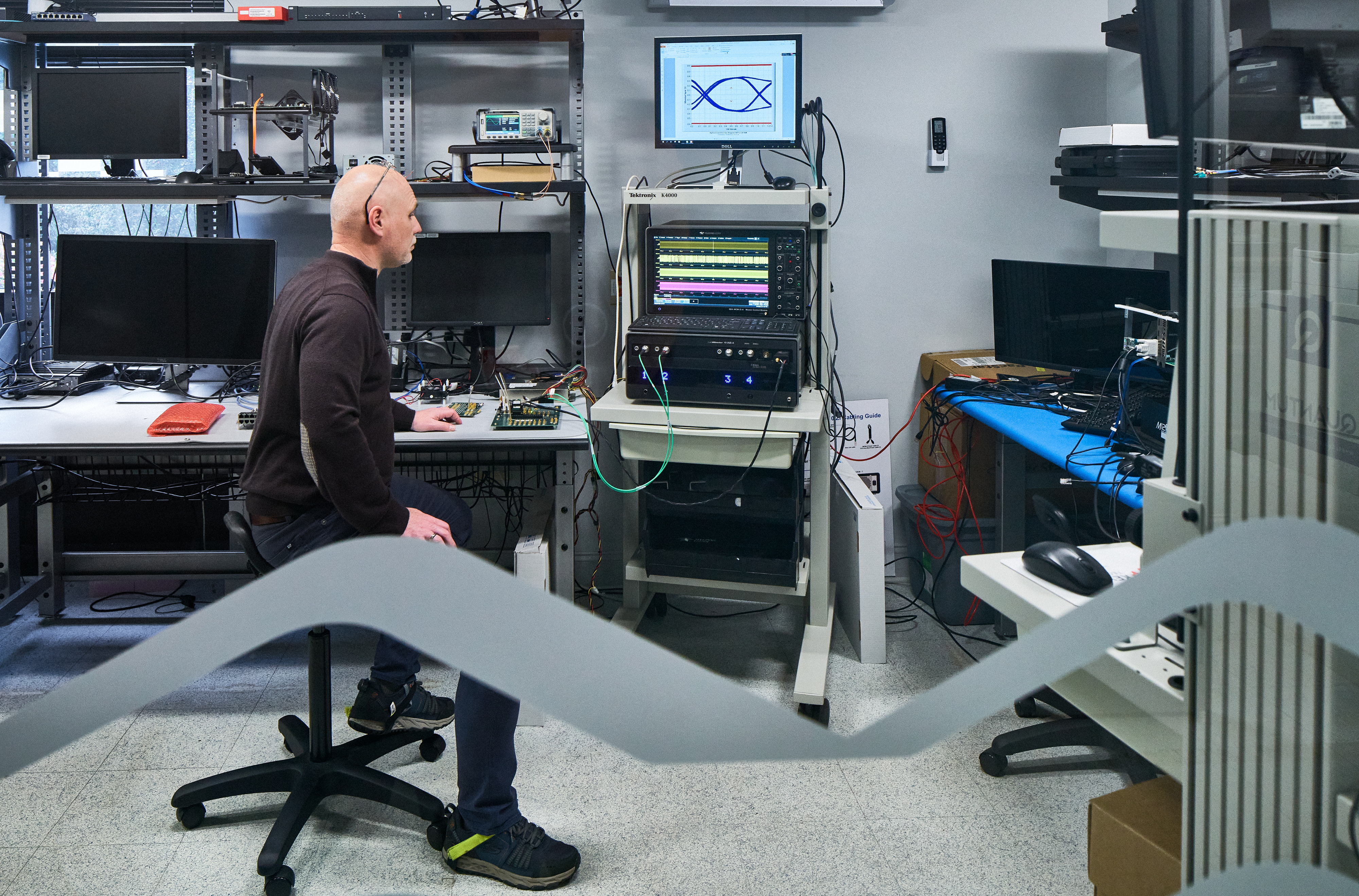
Sealevel validates designs using in-house simulation and environmental test systems before formal certification. Printed circuit board layouts undergo model-based tolerance and thermal transfer analysis, while oscilloscopes and digital signal analyzers verify signal integrity under load. Multi-angle X-ray inspection confirms assembly quality. Systems are then exercised on 2-axis vibration tables and in thermal walk-in chambers while actively running workloads, exposing failure modes before deployment rather than in the field.
The Cost of Change is Determined Early
In the AI era, change is inevitable. Engineering for long-term AI success is about sustaining performance as software evolves, workloads shift, and supply chains fluctuate.
AI success at the edge requires more from hardware than controlled environments ever will. Downtime is rarely caused by a single catastrophic failure. More often, it stems from accumulated design decisions that did not anticipate future demands.
The outcome of decisions made during platform design reveals itself over time, either through sustained reliability or through the cost of change.
For more information on Sealevel’s American-made rugged computers and I/O solutions, visit Sealevel.com.
Categories: