
How Embedded Hardware Supports the Autonomy Goals of FASCOM and Project Agincourt
Two distinct but related U.S. defense initiatives announced in fall 2026 have implications for embedded hardware providers. The Army’s Futures and Autonomous Systems Command (FASCOM) and the Defense Department’s Project Agincourt pursue autonomy goals that depend on hardware designed for operational use and repeatable production.
Defense Autonomy Hardware Snapshot
- Distinct initiatives. FASCOM addresses Army fielding priorities; Agincourt proposes a broader acquisition approach.
- Application needs. Workloads and existing equipment guide compute and I/O selection.
- Production readiness. Configuration control and testing support consistent hardware builds.
- Validated updates. Hardware changes require evaluation to preserve compatibility and supportability.
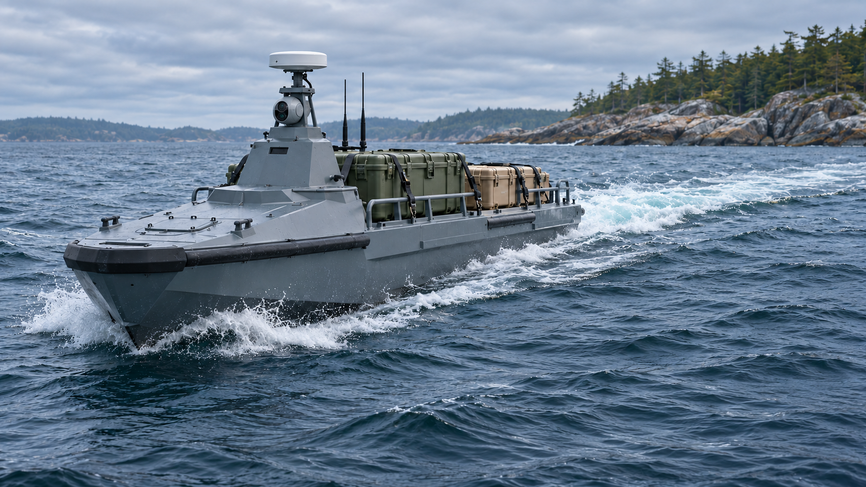
An autonomous resupply watercraft at the tactical edge needs onboard electronics suited to engine vibration and potential exposure to moisture. A rugged embedded computer must process sensor data and exchange information with vessel controls under those operating conditions. Fielding these vessels requires consistent manufacturing and equipment that personnel can maintain in the field.
The 2026 announcements of the U.S. Army’s Futures and Autonomous Systems Command (FASCOM) and the Defense Department’s Project Agincourt bring these engineering responsibilities into focus. FASCOM connects the Army’s development of autonomous capabilities with plans for acquisition and fielding. Agincourt proposes a new acquisition approach and prepares the pathway to the planned Autonomous Warfare Command (AUTOWARCOM).
The directives establish goals without specifying components or guaranteeing orders; specific hardware requirements will come from the programs that follow. Being aware of these initiatives now can help hardware suppliers assess how they might support future autonomous systems.
FASCOM Links Army Priorities with Fielding Goals
The Army’s October 1, 2026, memorandum directs the establishment of FASCOM along with related changes to force structure and acquisition. It also expands authorizations for technical specialties that work with unmanned and robotic systems. These actions connect the development of autonomous capabilities with the Army organizations responsible for acquiring them and the personnel who will operate and maintain them.
Autonomous Capabilities Span Different Platforms
The directive aligns autonomous capability across at least six Army formation areas: aviation, armor, fires, sustainment, engineer, and training.
It also calls for a Portfolio Acquisition Executive for Autonomy to assume single acquisition authority and responsibility for rapid procurement of priority autonomous capabilities. The Army will prioritize acquisition and fielding no later than fiscal year 2028 for capabilities including autonomous combat vehicles, watercraft resupply, and reconnaissance, surveillance, and target acquisition. The timetable gives suppliers a planning horizon.
Collaboration between manned and unmanned platforms is another stated priority. For hardware suppliers, supporting that coordination involves I/O that connects onboard computers with the communications equipment linking those platforms.
These priorities span platforms with different workloads and physical constraints, creating opportunities for embedded computing manufacturers. A resupply vessel and a reconnaissance vehicle may both require onboard processing, but their sensor configurations and connections to existing equipment can differ substantially. Those application differences shape how compute and I/O fit into each platform.
Platform Requirements Shape Compute and I/O Design
An autonomous platform’s hardware requirements begin with the work it must perform. Sensor data rates and required response times shape processing capacity, while available power and cooling limit the performance the installed computer can sustain.
Workloads and Existing Equipment Determine Hardware Fit
On a resupply vessel, navigation sensors and the information exchanged with onboard equipment influence hardware selection. While a reconnaissance platform combining camera and radar data may need significantly more processing capacity and high-bandwidth connections. The specific work each platform performs determines the hardware it needs.
The selected computer must also connect to the platform’s existing sensors, controls, and communications equipment. A compatible connector does not guarantee that two devices can exchange usable information. Electrical characteristics and communication protocols must match, with appropriate driver support. Serial or CAN interfaces may connect the computer to existing equipment, while discrete and analog I/O accommodate individual signals. These connections must also suit the platform’s operating conditions, with electrical isolation where needed and secure connectors that resist loosening under vibration.
Support needs must also be considered. The Army’s plans to expand unmanned systems and robotics roles across applicable units reinforce the value of accessible diagnostics and documented replacement procedures. Maintenance personnel need enough information to identify a failed component and restore the platform’s operation.
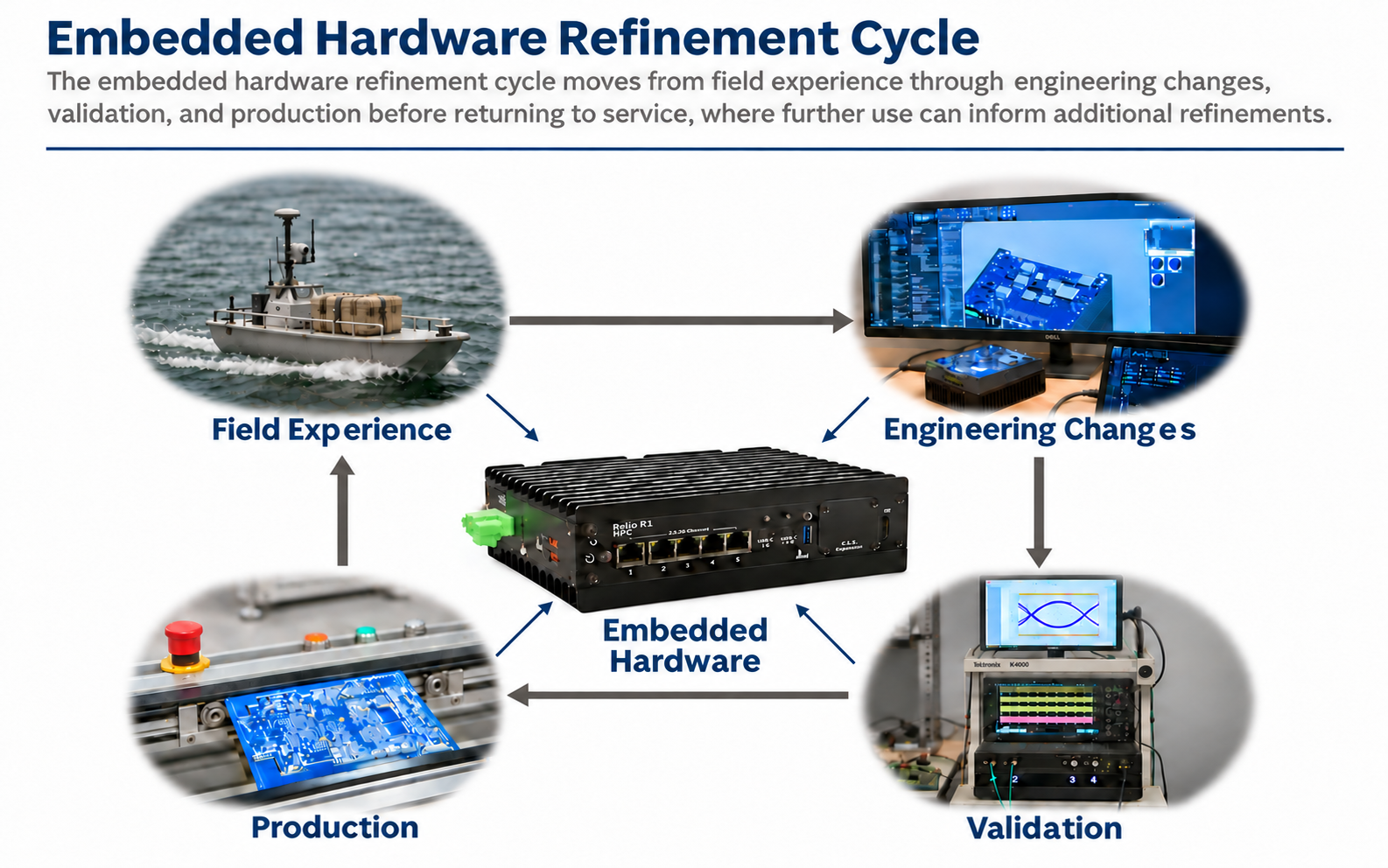
Field use can reveal opportunities to refine a platform’s hardware. Project Agincourt’s proposed acquisition model calls for military operators to work with developers and manufacturers, using field experience to inform further development.
Agincourt Connects Operators with Developers and Manufacturers
A Defense Department memorandum dated September 30, 2026, assigns Project Agincourt two related missions:
- Preparing the pathway to the planned AUTOWARCOM
- Prototyping an acquisition model for unmanned and autonomous systems
The proposed four-star command would serve the Joint Force, with an October 1, 2027, establishment target and necessary legislation pursued through Congress.
Operational Feedback Informs Development and Production
Agincourt’s acquisition approach aims to move decisions and funding closer to operational forces. The memorandum calls for a repeatable procurement process that supports adaptation and scales successful systems.
For embedded hardware suppliers, closer contact with operators can provide insight into how equipment performs in service and where refinements could improve integration. Testing might expose a connector that loosens under vibration or an interface that cannot accommodate a replacement sensor. Manufacturers can help determine whether a proposed change fits the existing design and how it would affect production.
That involvement gives manufacturing teams a strategic role while the system is still being refined. They can assess component availability and identify assembly or test requirements before a modification becomes part of the production configuration.
A successful field modification then presents another challenge: reproducing it consistently across subsequent builds while maintaining an accurate record of the hardware already deployed.
Production and Hardware Updates Support Adaptation
The planned AUTOWARCOM would have responsibility for testing equipment in rugged environments and modifying it rapidly. Combined with Agincourt’s emphasis on scaling successful systems, that approach makes production readiness part of the adaptation process. A modified computer or I/O board must perform its intended function and be reproducible under controlled manufacturing conditions.
Configuration Control Supports Builds and Future Changes
Component sourcing and bill of materials control establish what goes into each build. Production testing checks the completed hardware. Records linking each unit or production lot to its hardware revision and test results help teams investigate failures and identify deployed equipment that may need a change.
The choice among commercial off-the-shelf (COTS), semi-custom, and custom hardware also affects production planning. A standard platform may reduce initial development work, while a custom design can accommodate interfaces or physical installation needs that standard hardware cannot meet. The testing and documentation a program requires, along with expected production volume, help determine which approach is practical.
Updates introduce further tradeoffs. A replacement sensor may require more bandwidth, while a larger AI model may exceed the computer’s available processing or cooling capacity. Compute headroom and flexible I/O can preserve options, but those provisions must fit within the platform’s power and space limits. Each configuration change requires validation to confirm that the hardware still meets the application’s needs.
Obsolescence planning helps teams prepare for component replacements, including the engineering and testing needed to preserve compatibility. Preparing for those replacements helps teams keep deployed hardware configurations documented and supportable as components change.
The ability to carry a design change through production depends partly on how closely a hardware supplier’s engineering and manufacturing teams work together. That relationship becomes a consideration for autonomous system developers evaluating a hardware supplier’s support beyond the initial delivery.
Sealevel Supports Embedded Hardware Design and Manufacturing
Sealevel Systems designs and manufactures rugged embedded computers, communications products and I/O, with standard platforms and custom engineering options for application-specific requirements. Its work with drone developers illustrates the kinds of hardware integration and production challenges manufacturers could encounter when supporting the autonomy goals of FASCOM and Project Agincourt.
A customer developing hyperspectral imaging systems for drones initially used an off-the-shelf carrier board. Sealevel provided custom COM Express carrier board design and manufacturing once the customer’s requirements were refined and the product was approved for mass production.
Another customer developed AI-driven software for autonomous power-line inspection drones. The drones relied on multiple USB peripherals, but intense vibration loosened connections and caused repeated USB hub failures. Sealevel’s embedded four-port USB 2.0 hub provided a rugged design with locking connectors to address the connection problem. Each hub undergoes full functional testing before shipment.
These examples show how production requirements and operating experience can shape hardware decisions. Sealevel’s in-house manufacturing connects engineering with production testing and configuration control, while lifecycle support helps customers plan changes around equipment already in service.
Program Requirements Determine Where Suppliers Fit
FASCOM’s fielding priorities and Agincourt’s proposed acquisition approach give hardware manufacturers a reason to assess emerging opportunities against what they can deliver. A fielding goal signals intent, but program requirements will determine where a supplier’s capabilities fit. That distinction can help companies direct engineering resources toward work they are equipped to support.
Frequently Asked Questions
What is FASCOM?
The Futures and Autonomous Systems Command (FASCOM) is an Army command directed under an October 2026 memorandum. The initiative connects autonomous capability development with acquisition and fielding priorities, including a fiscal year 2028 horizon for priority capabilities.
What is Project Agincourt, and how does it differ from FASCOM?
Project Agincourt is a Defense Department initiative preparing the pathway to the planned Autonomous Warfare Command and prototyping an acquisition model that connects operators with developers and manufacturers. FASCOM focuses on Army capabilities; Agincourt addresses a department-wide approach.
Do FASCOM and Project Agincourt specify embedded hardware requirements?
The directives establish goals without specifying components or guaranteeing orders. Individual programs and applications will determine hardware requirements, including the processing capacity and interfaces needed for a particular platform.
How does I/O support autonomous systems?
I/O connects embedded computers with sensors, controls, and communications equipment. The connection must support compatible electrical signals and protocols, with appropriate software support. Interface and connector choices also depend on the platform’s operating conditions.
Why is manufacturing planning relevant to autonomous hardware development?
A working design must be reproducible when production expands. Component sourcing, configuration records, and production testing help maintain consistent builds. Coordination between engineering and manufacturing also helps teams evaluate how design changes affect future production.
Categories: