
How Sealevel Systems Built a Legacy of Supporting Critical Operations
A company that operates in the same industry for four decades without losing sight of its founding principles stands out.
Sealevel Systems Inc. is one of them.
The Liberty, South Carolina, manufacturer was launched in 1986 by a young married couple, Tom and Susan O’Hanlan. Tom, a patent-holding inventor, designed the first RS-422/485 communication adapter that was adopted by IBM, the world’s largest technology company at the time, for its personal computers.
That early partnership sparked the O’Hanlans’ vision for a startup that could meet the growing industry need for reliable, well-designed communication adapters.
A 2020 empirical study of 13 hardware startups found that companies emphasizing quality from the beginning are more likely to shape a strong long-term trajectory. The research showed that successful product development depends on maintaining a focus on quality in core components. Those early engineering decisions often determine whether a product platform can remain reliable and adaptable for years to come.
At Sealevel, the O’Hanlans made quality a priority from the start with an eye on the future. Ever since, that strategy has guided how the business approaches product and team development, customer support, and community relations.
Over the last four decades, Sealevel’s technology has grown from a single communication adapter to more than 350 standard I/O products, along with embedded and rugged computing systems that provide connectivity and control. While technology has changed, Sealevel’s legacy of supporting critical operations hasn’t.
A Legacy Built on High Expectations
Company Values Customers Depend On
The company designs and manufactures its products in the United States, meeting the expectations of customers who rely on stability, uptime, and long lifecycle availability.
At Sealevel, the Made-in-America commitment and the lifetime warranty on Sealevel-manufactured I/O products represent more than labels. They reflect how the company operates day to day. The business has built its reputation through values customers depend on: reliable products, direct communication, earned trust, and responsive support that is only an email or phone call away.
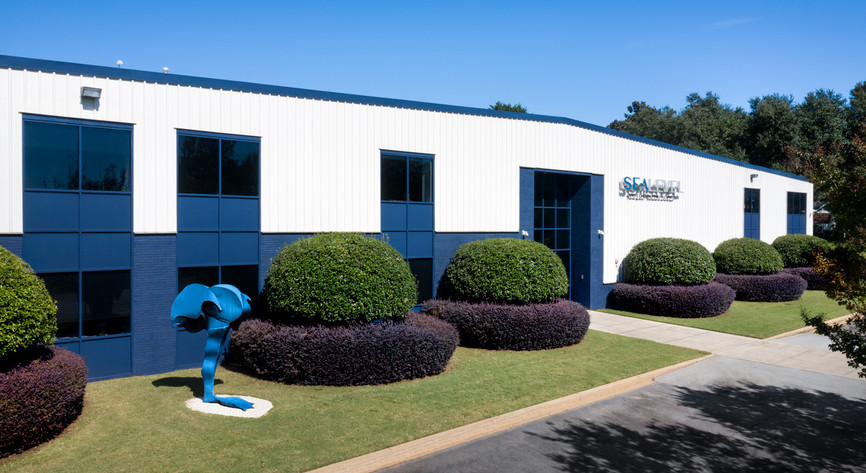
Susan O’Hanlan, Sealevel’s president, looked back on the company’s four-decade journey and pointed to the values set early on that continue to guide its work, performed in a 52,000-square-foot AS9100D and ISO 9001:2015-certified facility on a 17-acre site. The building includes 30,000 square feet of ESD tiling spanning the manufacturing, engineering, and tech support departments.
“It goes back to the quality and expectations that were set in 1986. When I reflect on that, the biggest milestone was when we moved to the factory and put in the manufacturing equipment. That changed the dynamic of who we are, what we were able to do, our capabilities, our insight, and our quality control,” she said. “Much has changed over the years, but what hasn’t changed is the culture and our determination to meet expectations and hold ourselves to the highest standards.”
From Circuit Boards to Rugged Embedded Systems
Engineering Solutions Customers Trust
In Sealevel’s early years, the company’s partnership with IBM helped establish its reputation for solving complex engineering challenges. What began with communication hardware for early personal computers soon revealed a pattern that would define the company’s future.
Customers came to Sealevel with tough problems. Instead of handing them a parts catalog to figure it out for themselves, Sealevel engineers sat down with them and designed a solution that would work in the real world.
As computing platforms evolved and customer needs grew, the systems Sealevel was asked to build became more complex. What began with circuit boards gradually turned into deeper engineering collaboration, with customers asking Sealevel to help design the rugged computing systems those components supported.
Susan described that growth as an organic result of the trust the company built with its customers.
“We're not a contract manufacturer. We're a design-build company. We set out to be a company that talks with and works side-by-side with customers to design and build the systems they need,” she said.
Those conversations often led to engineering improvements that simplified system design. One example was Sealevel’s development of an auto-enabled RS-485 circuit. The design reduced communication errors and eliminated the need for complex software controls.
The Design-Build Advantage
Supporting Critical Operations Across Industries
As Sealevel’s hardware advanced, so did customer requests. They needed systems that could process more data, support faster processors, and operate longer in harsh conditions.
Susan said those demands reinforced the innovative course Sealevel was already on and prompted engineers to make systems more flexible and customizable, both advantages of the company’s design-build model.
"Not only have designs gotten more difficult and we're building ruggedized computers now, but technology has also evolved on the factory floor," she said. "The technology has been really critical. Having that assembly line and being able to look deeper into every aspect of what we produce and have more control over every product sets us apart from many companies that do the same thing."
One step in that direction was adopting modular computing architectures such as COM Express. Instead of redesigning an entire computer every time processors improved, engineers could place the processor, memory, and core computing functions on a compact module. They could then design a carrier board tailored to the application’s specific I/O needs.
For customers building long-life systems, that design offered a clear advantage. When performance needed to increase, the processor module could be upgraded while the application-specific carrier board remained the same. That strategy minimized redesign risk, shortened development cycles, and extended the lifecycle of systems that may remain in service for decades.
Even with flexible hardware platforms, every customer project comes with unique requirements.
Some systems used standard hardware right out of the box. Others called for small adjustments to existing designs. Occasionally, a customer wanted a completely new solution built specifically for their location.
That reality led Sealevel to expand its development model into three practical options: commercial off-the-shelf (COTS) products, semi-custom platforms that adapt proven designs, and fully custom systems developed to customer specifications. As of 2026, custom engineering accounts for roughly 85% of the company’s work.
COTS, semi-custom, and custom options allow Sealevel to support many industries with computing systems that must run around the clock to prevent costly shutdowns, reduce traffic accidents, and detect threats. In energy systems, for example, Sealevel engineers have developed rugged controllers capable of coordinating turbine networks with built-in failsafe redundancy so operators can keep power flowing even if one system fails.

Industries may differ, but the starting point is usually the same. Sealevel engineers evaluate the customer’s requirements, constraints, and environment to determine the best path forward.
It’s a process that’s shaped the company for four decades and continues to guide how new systems are designed, built, and tested in-house.
Engineered for the Edge
Enabling Data Collection with AI-Ready Platforms
Today, many of Sealevel’s systems are engineered for the edge. Industrial monitoring equipment, infrastructure networks, and mobile platforms increasingly need to process information on-site.
The shift from central servers to local inference is creating new opportunities for rugged embedded systems. Instead of collecting data and sending it elsewhere for analysis, modern systems are expected to process information on-site so they can respond without delay. Advances in edge computing and artificial intelligence (AI) are making that possible, allowing organizations to monitor situations in real time and make faster operational decisions.
For Sealevel, adapting to those changes feels like a natural extension of the work the company’s always done, helping customers find solutions for where it matters most.
Edge AI platforms must balance a lot at once: processing power, energy use, heat, and longevity. Getting that balance right is critical for real-world applications such as infrastructure monitoring and aerial surveillance. Sealevel engineers have found that balance in an IP67-rated, AI-ready computer designed for multiple uses.
Susan said AI’s potential is still being discovered and its benefits are far-reaching.
“AI’s a great growth opportunity for us like it is for every electronics company,” she said. “What excites me is how we can use it to support our customers and our market as AI progresses.”

The People Behind the Product
A Company Culture Built on Respect and Collaboration
Technology shapes the systems Sealevel builds, but the people behind them make the work possible.
From engineers and technicians to manufacturing specialists and professional staff, Sealevel’s teams work closely together to design, build, and support the hardware that customers depend on.
Susan said collaboration has always been one of Sealevel’s strengths.
“The Sealevel team plays a huge role in our innovation. People have the autonomy to do their jobs, to explore new ideas, and to share those ideas with each other,” she said. “It’s not just leadership making decisions. The whole company helps shape our growth and our future.”
That level of respect has helped Sealevel attract and retain skilled personnel who take pride in their work. Many Sealevel employees have spent decades with the company.
For customers, that continuity makes a difference. When they contact Sealevel for support, they often speak with the same sales professionals or engineers who helped initiate the purchase or design the system. Those long-standing relationships, the trust they build, and the problems they help solve have defined Sealevel’s legacy for four decades.
Investments at Home
Supporting Growth in the Community
From its home base, Sealevel has grown into a regional employer and contributor to South Carolina’s broader economy.
The company employs more than 100 people, and its workforce has grown more than 56% since 2020. An additional increase is planned for 2026, expanding opportunities across technical and business roles.
Sealevel continues to invest in its Liberty, SC facility, adding new equipment and expanding manufacturing capabilities while helping employees build new technical skills. The goal is simple: give engineers and technicians the tools they need to build more advanced systems while preserving the quality customers have depended on for decades.
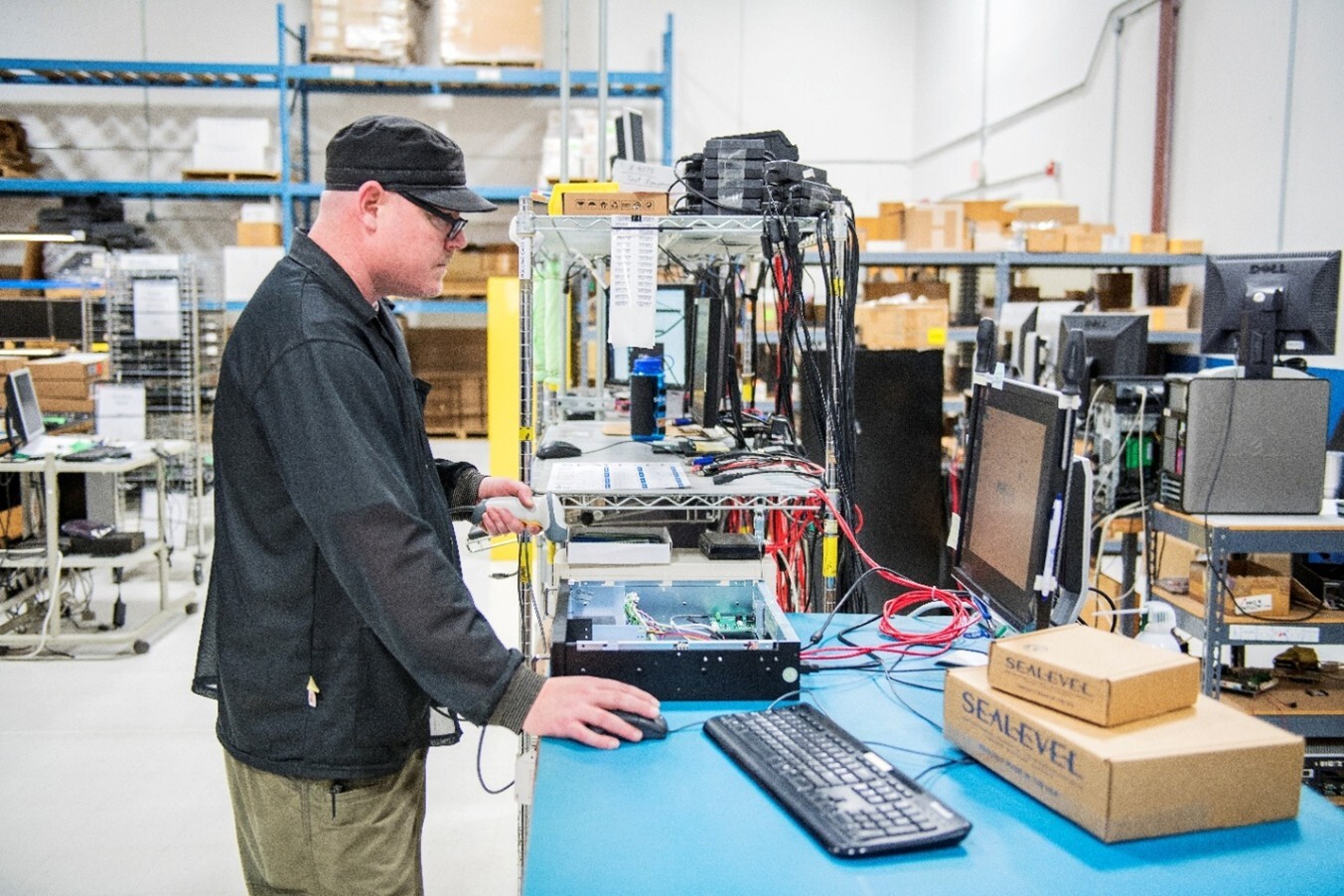
Sealevel’s investment in the state extends beyond its own facility. Between 2022 and 2025, the company conducted roughly $70 million in business with more than 60 South Carolina suppliers and service providers.
Developing the next generation of engineers and technical professionals is another part of that commitment. Sealevel works with local universities and technical colleges to recruit talent and create opportunities for students interested in careers in engineering, electronics, and advanced manufacturing.
Sealevel’s support for the community extends beyond the workplace through charitable giving and local engagement. Its philanthropy highlights the company’s belief that strong businesses and strong communities grow together.
For 40 years, Sealevel Systems has cemented its legacy by engineering reliable solutions, assisting customers, and contributing to the people and communities that make that work possible. Technology will continue to change, but the principles that shaped the company from the start remain the same.
“When we look back on what Sealevel has accomplished for our customers around the world, the opportunities it’s created for our dedicated employees, and the impact we’ve made across the community that supports us, it just makes me so proud to be a part of this team that does such an incredible job doing what they do,” Susan said.
Categories: