
WEST 2026: What the Trends Mean for Rugged Embedded Computing Programs
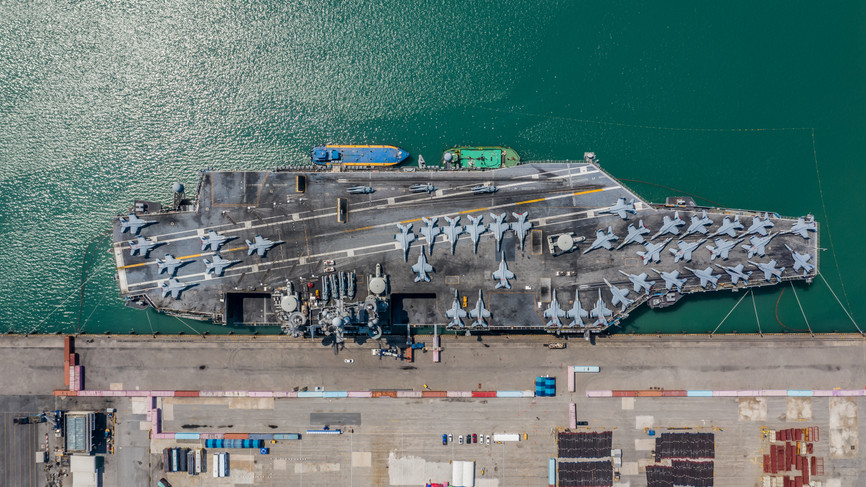
Several trends emerged at WEST 2026 that are influencing maritime system development.
For organizations supporting rugged embedded computing and mission-critical I/O, expectations around performance, integration, and adaptability are shifting as artificial intelligence (AI), cybersecurity, and modernization efforts take on greater operational importance.
Across the event floor, conversations and presentations focused on accelerating capability, strengthening cybersecurity, modernizing legacy infrastructure, and scaling autonomy in real operating environments. The following trends surfaced throughout the week and are likely to shape program decisions moving forward.
AI Integration Reshaping Maritime Systems
ISR Processing Increasing at the Tactical Edge
Rather than being treated as a standalone feature, AI is being integrated into overall system design. Much of the focus centers on maritime ISR and situational awareness, AI-driven visibility across distributed maritime networks, and hybrid cloud approaches that move processing closer to the tactical edge. This direction aligns with the Department of Defense’s AI acceleration strategy, which prioritizes faster deployment of AI capabilities and greater processing at the tactical edge.
Ships, unmanned vessels, and forward-deployed platforms require local compute capable of ingesting high data volumes, running AI, and delivering actionable outputs. Programs are working to shorten validation cycles, accelerate analysis, and reduce reliance on constant cloud or command-center connectivity.
AI workloads are being planned alongside traditional applications, which raises expectations for reliable I/O bandwidth, data throughput, and long lifecycles.
“Five years ago, systems operated separately. Now the focus is integrating multiple sources into one platform and letting AI analyze it all together,” said Joe Albertson, Senior Sales Engineer at Sealevel Systems.
For AI analysis, platforms must support higher compute density, AI-accelerated processing, increased power demands, and reliable thermal management in sealed, fanless maritime systems.
Modernizing Legacy Systems Without Full Replacement
Programs extending system life, reducing rack footprint
Hundreds of legacy systems must be modernized without disrupting fleet operations. While broader upgrades are coming, many programs remain focused on extending and improving systems already deployed. Large rack systems aboard ships consume significant space and power while generating heat, increasing pressure to reduce the footprint while maintaining modularity and performance.
Programs are modernizing by adding new capabilities to existing architectures. That increases the need for compatibility, reliable I/O interfaces, and long-term support for updated software. Systems must allow secure firmware updates, configuration changes, and incremental upgrades without disrupting operations.
Cybersecurity is Merging with the Platform
Hardware-level protections are becoming standard
Cybersecurity is increasingly being built directly into operational systems instead of relying only on firewalls and network monitoring tools. Intrusion detection is now embedded within deployed platforms, automated tools that scan software for hidden vulnerabilities, and hardware-level protections designed for field use.
Cyber monitoring is now part of the system itself. Deployed systems must check for tampering, verify firmware integrity, and receive updates without shutting down operations. Hardware is expected to include inherent security features and secure design practices that strengthen system trust from component selection through final deployment.
“Customers want hardware to have inherent security so it can be trusted. As requirements evolve, secure design and U.S.-based manufacturing are becoming just as important as performance,” said Laura Hanks, Western Regional Sales Manager at Sealevel.
MOSA, SOSA Driving Modular Hardware Design
Open architectures enabling incremental tech insertion
MOSA and SOSA principles are shaping VPX-based systems and open architecture design across maritime and defense programs. Programs want hardware platforms that allow compute modules, storage, and I/O cards to be upgraded or replaced without redesigning the entire system. Open architecture also supports mission flexibility, enabling platforms to integrate different payloads or capabilities as operational needs evolve.
That focus places greater emphasis on modular chassis designs that allow plug-in card upgrades, standardized interfaces, and hardware built for expansion. Incremental tech insertion supports faster deployment and reduces long-term integration risk. Flexibility in this context means component-level adaptability, not just software updates.
As requirements evolve, platforms must accommodate new processing demands and I/O configurations while remaining aligned with open standards.
Autonomy Expanding Across Maritime Operations
Distributed platforms require more edge processing
Autonomous surface vessels and distributed maritime platforms are being designed to operate independently or in coordinated fleets, processing sensor data locally while maintaining mission awareness.
“Autonomy isn’t just about one unmanned vessel anymore. It’s about coordinated systems operating together and sharing data in real time,” said Ben Fleschler, Inside Sales Representative at Sealevel.
As a part of coordination, systems must manage communications, navigation, and payload integration without constant external control. As autonomy expands, the supporting hardware must carry more of the workload. Embedded platforms are expected to handle increased video processing, sensor fusion, and real-time decision support at the edge.
Maritime conditions add further demands on durability, thermal performance, and long-term reliability. As programs mature, embedded compute performance and dependable I/O become central to sustained operational capability.
Portfolio Oversight Reshaping Acquisition Timelines
Platforms entering evaluation face higher integration standards
Acquisition structures are shifting toward portfolio-based oversight and broader mission alignment. The move toward Portfolio Acquisition Executives (PAEs) is intended to reduce internal silos and give leaders more authority across related programs. That structure allows faster trade-offs, clearer accountability, and quicker decision cycles.
Systems entering evaluation must align with open standards, demonstrate interoperability early, and reduce integration risk from the start. As decision timelines tighten, platforms that are easier to configure and validate may move through the process more efficiently. Technology cycles appear to be accelerating, especially for programs tied directly to operational readiness.
Deploying Rugged Embedded Computing with Confidence
Taken together, the trends reflect a more integrated and deliberate approach to maritime capability. Processing is moving closer to the edge. Cyber protection is being built into deployed systems. Modernization is happening within existing infrastructure. Acquisition cycles are aligning more closely with mission outcomes.
For rugged embedded computing providers and system integrators, these shifts reinforce the importance of reliable performance, modular design, long-term support, and secure system architecture. Deployments must scale AI workloads, support evolving mission requirements, and maintain operational integrity over time. Confidence in the field begins with platforms designed to meet those expectations from the outset.
Maritime programs are impacted by these market shifts now. Contact Sealevel today to explore how rugged embedded computing for defense can support confident deployment in the years ahead.
Categories: