
Custom Computing Benefits: Solving Real-World Challenges in Embedded Systems

When embedded systems must support critical operations under complex or highly specific conditions, custom computing solutions become the right approach to meet the application’s unique demands.
Custom computing allows systems to be designed around the application rather than constrained by commercial off-the-shelf (COTS) hardware limitations. Some applications must operate in harsh conditions where rugged computers are required to maintain performance over long deployment cycles. Others require specific I/O configurations, processing capabilities, or form factors that standard systems cannot support. In these situations, custom computing provides a path forward.
These benefits become clear when looking at the kinds of problems these systems solve.
The Real-World Problems Custom Computing Solves
Teams don’t all arrive at custom computing the same way. Some are starting new embedded system designs with specific requirements. Others are replacing legacy systems or expanding existing platforms. Custom computing is typically chosen when COTS systems cannot meet environmental, lifecycle, or performance demands, including the technical requirements and specifications the application calls for, without compromise.
In one case, a petrochemical facility required a monitoring system to track voltage and temperature and send alerts when conditions changed. These decisions are often driven by constraints such as unsupported I/O configurations, system integration challenges, or processing requirements that exceed standard platforms.
A custom solution was developed to capture and analyze data in real time, reducing reliance on operator judgment and helping prevent performance failures tied to human interference.
In situations like this, custom computing solutions are driven by constraints that COTS technology cannot fully address.
When the System Almost Fits, but Not Quite
One of the most common challenges is a system that doesn’t meet all the requirements, forcing compromises. Processing capability may be sufficient, but the I/O doesn’t align with the application needs. To adjust for that, adapters or secondary components are added to bridge the gap. Over time, workarounds become part of the system and introduce additional failure points. Integration becomes more complex, and the cost of keeping the system running exceeds what was initially budgeted.
Custom computing resolves this at the architecture level. Instead of adapting around limitations, the architecture can be designed with precisely the required interfaces, ultimately reducing complexity and managing costs.
When the Environment Defines the Design
In some applications, the environment drives system requirements. Hardware shouldn’t be deployed in conditions it wasn’t designed for, such as hazardous or regulated environments where systems must meet defined safety and compliance requirements. These requirements often extend beyond environmental protection to formal certification standards that must be considered from the outset of the design.
Temperature extremes, vibration, and environmental exposure to dust or moisture all affect performance. Embedded rugged computers are expected to run continuously under these conditions. If they can’t, failure could disrupt operations or lead to significant cost overruns.
Sealed enclosures are essential for withstanding dust and moisture. This is why ingress protection, such as IP-rated enclosures, becomes part of the design process to prevent intrusion.
When System Lifecycles Outlast Hardware
Some systems are expected to remain in service for years or even decades in defense and aerospace applications. COTS platforms typically cannot meet these longevity requirements. When components become unavailable, redesigns become necessary. Each change compounds risk, especially in systems that require certification or validation. A custom approach allows for greater control over component selection and system design.
Custom computing solutions make it possible to plan for long-term availability and manage transitions as components reach end-of-life (EOL). It also supports consistency across deployments, reducing the need for redesigns.
When Integration Becomes the Bottleneck
There are cases where individual components perform as expected, but the total system still struggles. The issue is how those components interact within the system.
Interfaces don’t align cleanly, and data paths become more complex, with information passing through extra components before reaching its destination. Integration becomes the bottleneck, not because of missing functionality, but because of how components must be coordinated to work together. Custom computing allows those interactions to be designed into the system from the outset.

Through custom engineering, interfaces can be defined to match the application, reducing the need for adapters or layers between components. That simplifies the design, shortens development time, and improves how the system scales as requirements evolve.
Why Custom Computing is Often the Right Solution
Some systems evolve toward custom computing solutions over time. In others, it is identified at the start as the best approach based on the application’s requirements.
Whether chosen or grown into, designing the system around the application becomes the more effective path forward.
Designing Around the Application
Custom computing solutions allow systems to be defined by the application requirements. Processing, I/O, and physical design can be aligned to support intended functionality.
Size, weight, power, cost, and cooling (SWaP-C²) can also be managed as part of the design, allowing systems to address constraints without limiting capability. This approach leads to more efficient designs and better overall performance because each element of the system is selected and arranged to prevent tradeoffs.
Choosing the Right Level of Customization
Not every application requires a fully custom system. In many cases, a semi-custom approach provides the right balance between flexibility and development effort.
Semi-custom computing starts with an existing platform and adapts it to better fit the application. That can include modifying I/O, adjusting form factor, or integrating the system into a different enclosure while keeping the core architecture intact.
This approach works well when application needs are close to what standard platforms already support. It allows teams to improve alignment without committing to a full custom design.
As requirements become more complex, however, extending an existing platform can become harder to manage. At that point, designing a fully custom system around the application becomes the more sustainable path forward.
Owning the System Architecture
With a custom approach, system architecture is defined early in the planning process and used as the foundation for how the system will be laid out, manufactured, and supported for the long-term. In many applications, decisions must also account for certification requirements during system architecture development, since compliance with standards such as MIL-STD, EMC, or hazardous location ratings can directly influence component selection, layout, and enclosure design.
That structure determines how processing is separated from application-specific functionality. In modular designs, compute and I/O are not tied together on a single board. Instead, they are divided between a processing module and a carrier board developed for the application.
This separation allows the system to move to the next generation of processors without requiring a full board redesign. Changes to compute can be made independently, reducing the work required to keep the system current as technology advances.
Component selection, form factor, and system architecture can be planned to support long deployment lifecycles. This provides continuity across deployments for programs that require stability over extended periods. When components reach EOL, updates can be made within the existing architecture instead of forcing a complete redesign.
Building on a Modular Foundation
Custom computing often builds on modular standards such as Computer-on-Module (COM) designs paired with carrier boards.
This approach shortens development cycles since the processing platform is already established. It provides a more direct path from concept to production. Systems can be updated, tested, and deployed without reworking the entire system each time demands evolve. Engineering work can focus on the parts of the system that are specific to the application rather than creating an entire system.
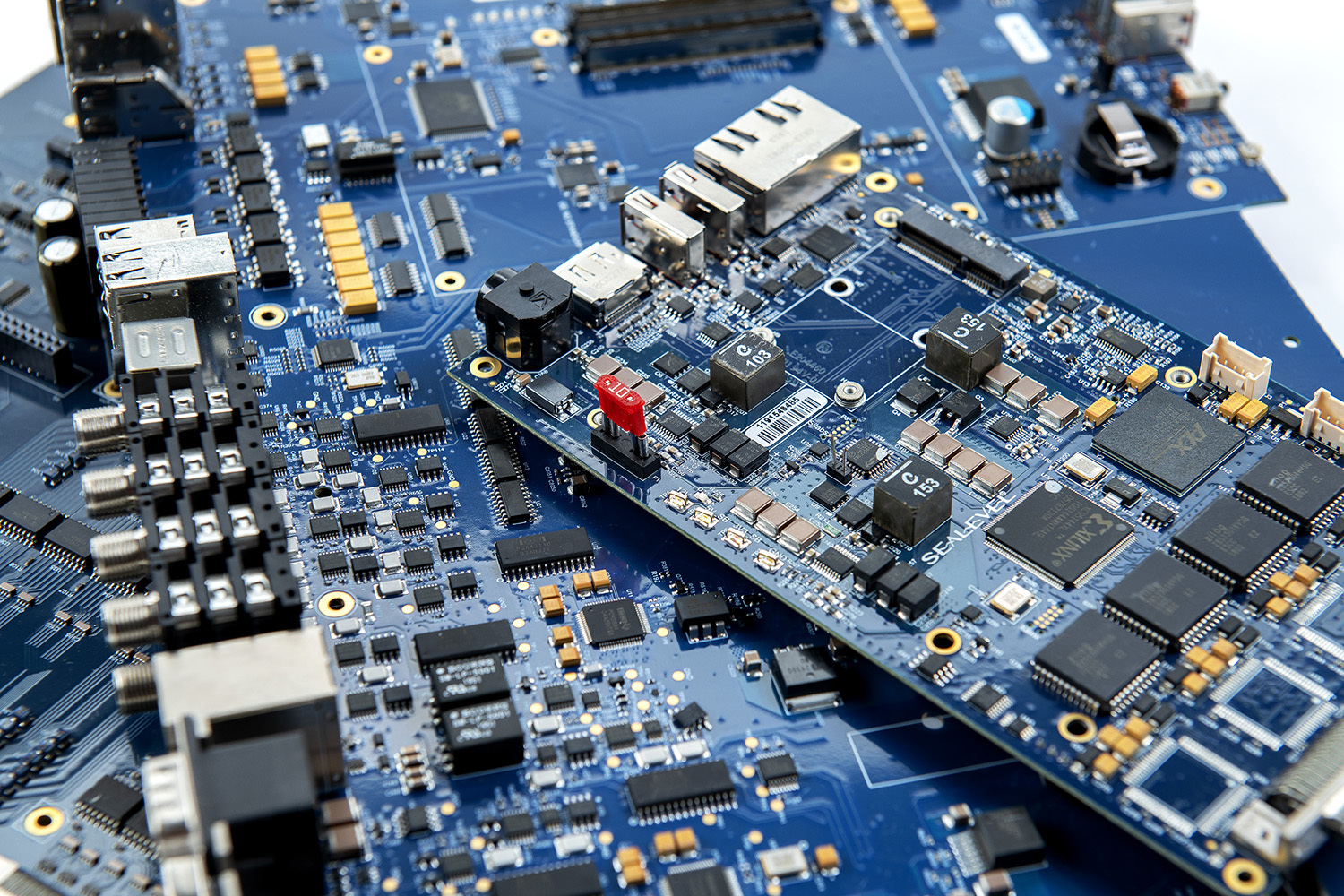
COM architectures, such as COM Express and COM-HPC, use a modular approach where a standardized computing module installs on a carrier board that provides the application-specific I/O and external connectors. These architectures reduce the complexity, cost, and time required for custom computer system design by combining processing, memory, and core interfaces into a compact, highly integrated module.
Improving Reliability through Design and Validation
Reliability is shaped by how the system is designed and validated before deployment.
A custom approach allows unnecessary components and intermediate layers to be removed, resulting in simpler, more direct system architectures. Fewer connections and shorter data paths reduce the number of potential failure points. Likewise, internal cables can be eliminated. Using COM architecture, I/O connectors can be integrated directly onto the carrier board, eliminating internal cables and reducing connection failures in shock and vibration conditions.
Equally important is reducing risk before deployment. Early validation through prototyping and targeted testing helps ensure predictable embedded system behavior under real-world conditions, improving reliability and reducing the likelihood of field failures.
How Sealevel’s Custom Computing Systems Are Developed
Sealevel Systems’ custom computing process is structured but allows for iteration as new information is discovered. It evolves as needs are clarified, designs are tested, and decisions are refined. Depending on the program, this process may range from full turnkey development to manufacturing and integration of a customer-defined design, allowing teams to engage at the level that best fits their internal expertise.
Sealevel offers end-to-end capabilities that span from schematics to post-production support with oversight at every stage. The path from concept to deployment follows a structured process, but it can be understood at a high level through the key stages below.
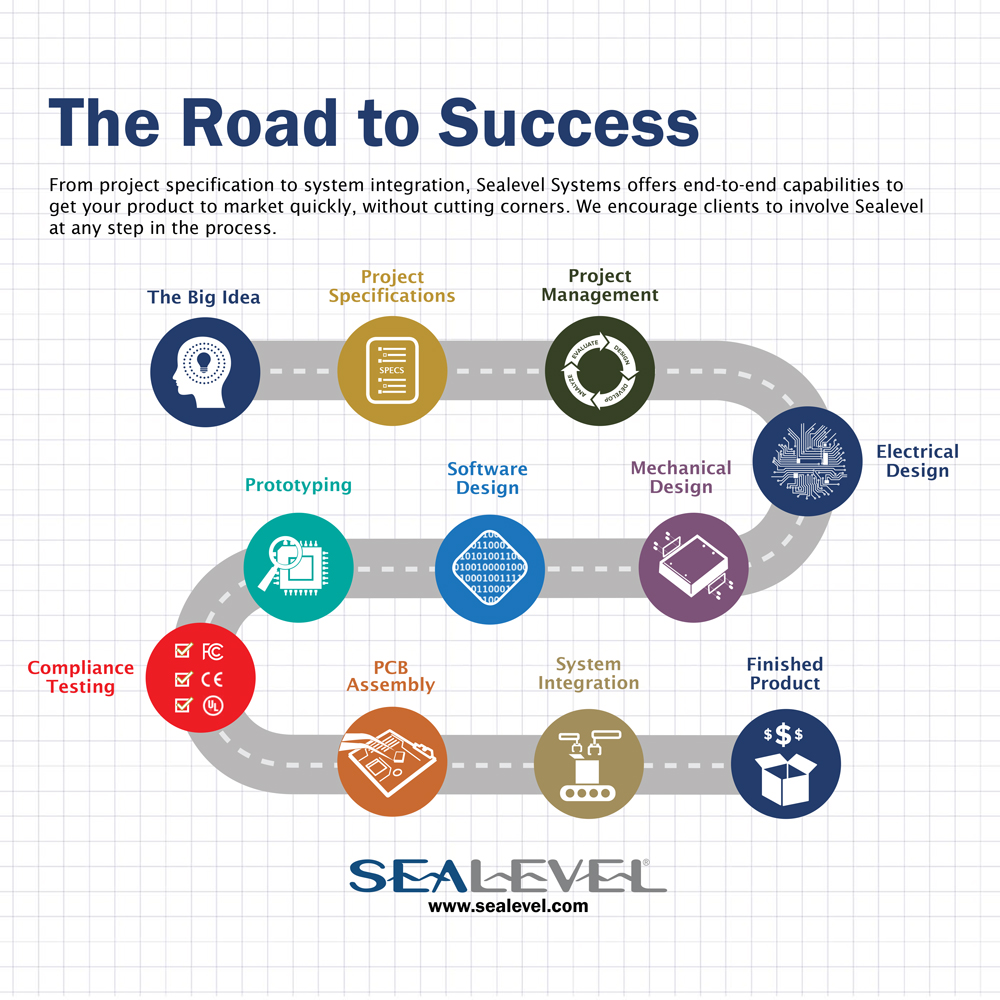
Defining the Project and Specifications
Every project starts with working with the customer to assess what the embedded system needs to do and the conditions it will operate in. That includes performance expectations, environmental factors, interfaces, and long-term deployment considerations.
At the beginning, the goal is not to finalize every detail, but to understand the idea and define the boundaries of the system. Early decisions shape the direction of the design, so project specifications are evaluated carefully to ensure they reflect how the system will be used.
Project management is a crucial part of the process. Sealevel’s teams, guided by a dedicated project manager, share ownership and work in unison, not in silos. Rather than moving through isolated steps, the design evolves through collaborative teamwork.
Designing the System
Once expectations are established, the system design takes shape across electrical, mechanical, and software domains. These domains work in tandem. When decisions and information need to be communicated across functions, it’s an advantage to having an end-to-end process in-house.
Component selection, board layout, thermal considerations, and enclosure design are all addressed as part of a unified effort. Engineering efforts are often accelerated by leveraging proven design libraries and validated architectures rather than starting from a blank slate.
These decisions are also evaluated early for manufacturability through design reviews and simulation. Clear communication supports this evaluation. Everyone on the project team stays aware as adjustments are made. This approach helps ensure system features operate as intended when all elements are combined.
Sealevel uses tools such as 3D modeling and simulation to evaluate component placement, thermal behavior, and environmental performance before hardware is built. This allows systems to be optimized early and designed to handle large or demanding workloads more reliably.
Validating through Prototyping and Testing
Before a design is finalized, simulations and testing focus on signal integrity, thermal performance, vibration resistance, or environmental durability, depending on the application and location. This phase helps reduce uncertainty by confirming that the embedded system behaves as expected outside the lab.
Sealevel’s “design for certification” approach to engineering and manufacturing ensures that compliance, test, and certification engineers are involved beginning with initial concepts. Prototypes allow engineers to evaluate performance, confirm assumptions, and identify issues that may not be visible in early design stages. This validation is typically performed in-house and may include environmental, compliance, and functional testing, allowing issues to be identified and resolved before formal certification or deployment.
Systems are also evaluated in real-world conditions through beta testing. By validating the system before production, risks can be addressed while changes are still manageable and costs controlled.
Finishing the System: Assembly and Integration
As the design is finalized, attention shifts to how the system will be built, delivered, and supported over time. Assembly processes are defined to ensure consistent builds, controlled quality, and full traceability as production begins. Component-level traceability is maintained throughout manufacturing, enabling visibility into part origins, lot history, and system configuration across the full lifecycle.
At this stage, hardware and software are brought together and validated as a complete system. Interfaces and data flow are re-verified to ensure the embedded system performs as expected when fully integrated.
Because the architecture and key design elements have already been validated, manufacturing can move forward without revisiting earlier design choices. This reduces delays late in the process and helps keep time to market on track.
Sealevel maintains inventory levels to ensure continued production and reduce supply chain risk. To manage obsolescence, Sealevel designs with early-life-cycle components and uses ongoing analysis to identify at-risk parts, allowing updates that maintain form, fit, and function of the embedded computers without disrupting the system.
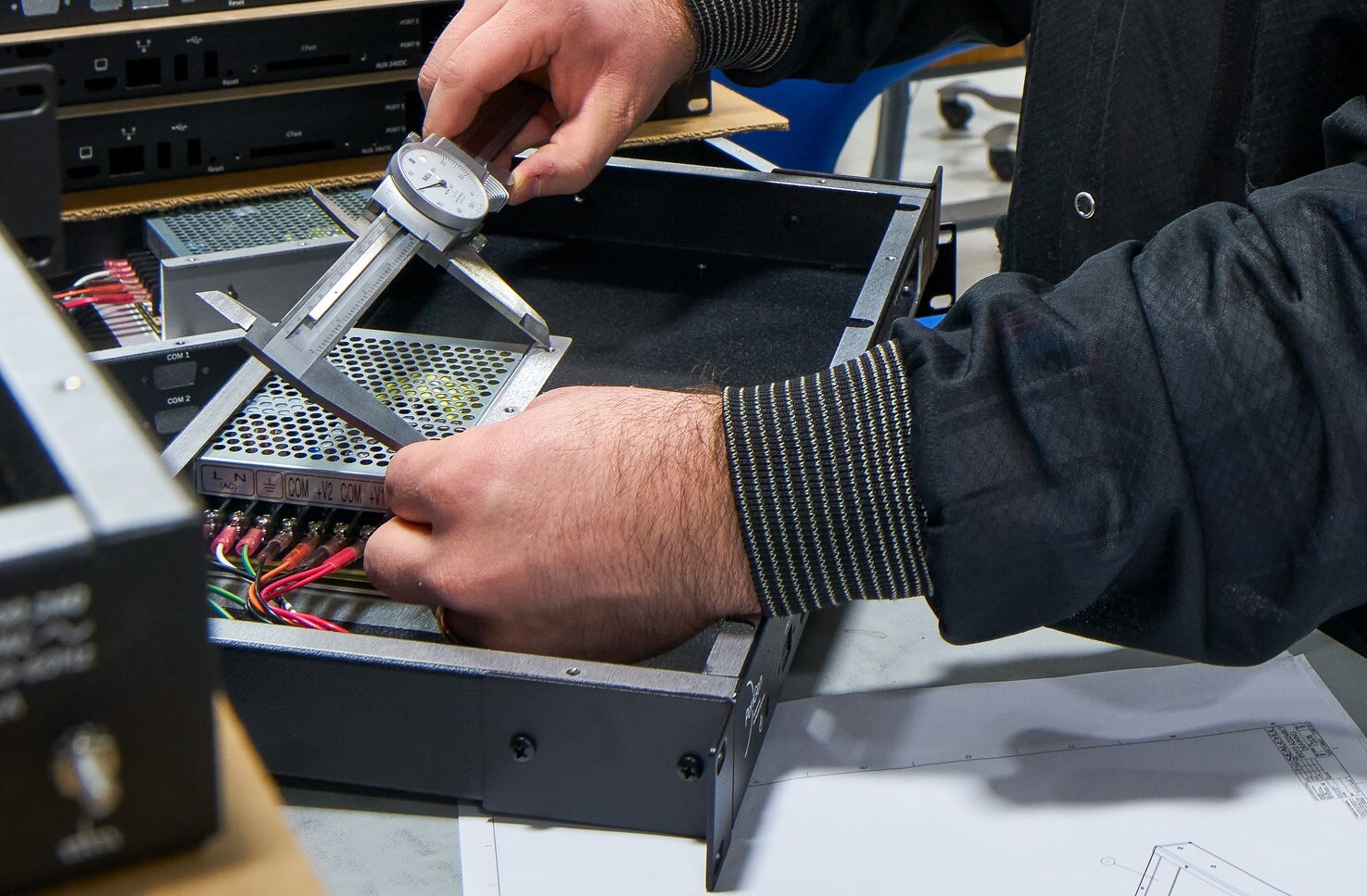
Manufacturing and assembly take place in Sealevel’s AS9100D, ISO 9001:2015-certified facility using in-house processes and a state-of-the-art Surface Mount Technology (SMT) line that drives printed circuit board (PCB) assembly. A dedicated “Special Projects” area allows for enhanced physical security and is fully configurable to optimize production for original equipment manufacturers (OEMs).
Sealevel’s quality control extends beyond final testing. Inspections are performed throughout the build process, including solder paste inspection, automated optical inspection, and full functional testing to ensure each board meets its design requirements. End-to-end traceability is maintained from raw materials through final assembly, providing visibility into how each system is built and verified.
Custom Computing in Practice
A System-Level Example
Once deployed, custom computing solutions make their benefits clear in how embedded systems perform in critical environments. In a healthcare industry application, a custom computing system was developed to monitor fetal heart rates.

Using a COM Express architecture, the embedded system met strict space constraints for long-term deployment. By separating processing from application-specific I/O, the system could move to next-generation processors without redesigning the full platform. Connectors were integrated directly onto the carrier board, eliminating internal cabling and reducing potential failure points.
Compliance engineers were involved early to support certification requirements, and the overall architecture allowed the system to scale as needs evolved. The result was a platform that could be updated and maintained with greater confidence over time.
In cases like this, long-term, reliable performance is not determined by specifications alone, but by how well the system architecture supports change, reduces risk, and aligns with the conditions for which it was designed.
When evaluating your options, Sealevel helps determine whether a semi-custom or fully custom solution is the right fit for your application. Learn more about Sealevel’s custom computing solutions and how they can be tailored to meet your needs.
Frequently Asked Questions About Custom Computing Benefits
What is Custom Computing in Embedded Systems?
Custom computing is the practice of designing hardware directly around an application's unique requirements, avoiding the performance compromises associated with standard off-the-shelf components.
How does a Semi-Custom Approach Differ from a Fully Custom Design?
Fully custom systems are built from a blank slate to meet highly specific requirements. Semi-custom systems adapt a proven, pre-validated platform by selectively modifying elements such as I/O, thermal management, or enclosures to reduce development time, cost, and risk.
Why does Environmental Exposure Drive Custom Hardware Design?
Harsh operating conditions such as extreme temperatures, dust, moisture, shock, and vibration require specialized ruggedization and sealed enclosures that standard, commercial-grade hardware simply cannot withstand long-term.
What is the Advantage of Using a Modular Foundation (COM Architecture)?
A COM-based architecture separates the core processing module from the application-specific carrier board, allowing processor upgrades and technology refreshes over long operational lifecycles without requiring a full system redesign.
How does Early Validation Lower Lifecycle Costs?
Using prototyping, simulation, and compliance testing from the start helps identify design issues before deployment, preventing costly integration bottlenecks or redesign delays late in the process.
What does Managing SWaP-C² Mean for Custom Engineering?
SWaP-C² refers to optimizing Size, Weight, Power, Cost, and Cooling at the architectural level to help achieve peak efficiency without sacrificing computing performance.
Categories: