
Sea, Air, and Space 2026: What Edge Operations Mean for Maritime Systems
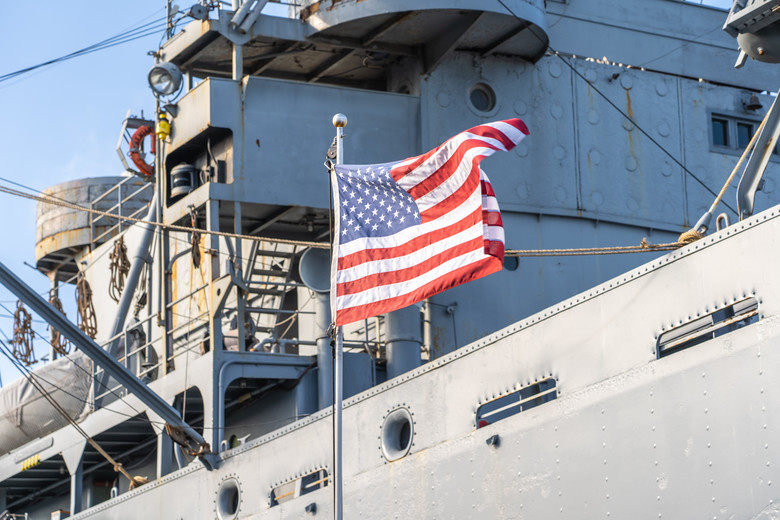
A demonstration of maritime watercraft highlighted the ingenuity on display at Sea, Air, and Space 2026 in National Harbor, Maryland.
One boat rose above the Potomac River on actively controlled hydrofoils. Others were powered by electric and solar panels. Several operated autonomously. Some featured mounted payloads.
That was just a sampling of how maritime systems across the U.S. Navy, Marine Corps, and Coast Guard are advancing. Across the show floor and in the conference sessions, several trends surfaced that relate to how technology is being designed, developed, and deployed.
Compute and AI platforms are becoming more distributed. Control functions and decision-making are moving closer to the operator. The margin for delay is shrinking.
For engineers developing embedded and rugged computing, the challenge is designing systems that can operate, adapt, and continue functioning in real time at the edge, even in constrained environments. Delays or failures in those environments directly impact mission performance.
Edge Design Starts with Field Sustainment
Operators are Expected to Maintain Systems at the Edge
Designing systems for the edge extends beyond performance and now requires considering how they’ll be maintained in the field.
That places more emphasis on serviceability, from component selection to how systems are packaged and accessed. In addition, systems are expected to continue running in real-time even when access to networks or support aren’t available.
“We are definitely seeing a shift toward more self-sufficient systems,” said Clay Counts, Eastern Regional Sales Manager at Sealevel Systems. “The compute power and decision making at the edge has increased significantly in recent years. Strategically this allows end users to remove the risk of losing connection and reduces the risk of outside tampering.”
Operators rely on those systems to help identify and flag issues that could affect performance or decision-making. That requires hardware and software ready for the tactical edge that support real-time monitoring and diagnostics to ensure sustained operation.
Speed is Reshaping Maritime System Design
Systems Must be Updated within Limited Windows
Maritime systems are being designed with the understanding that upgrades and maintenance must happen within limited access windows. Ships and platforms aren’t always available for extended integration work, so systems must be installed, updated, and returned to operation quickly.
“In the military space, many customers are looking for modular systems that can be integrated into a final platform,” Counts said. “The desire is for commercial solutions, but in practice many applications still require modification or customization to fit the requirements.”
That calls for architecture that supports rapid modification without disrupting the entire system. Rather than relying on large, one-time deployments, programs are moving toward incremental updates that can be applied as needed.
That reality’s shaped in part by procurement structures, which often require systems to evolve incrementally rather than through full replacement.
Cyber Resilience Starts at the Platform Level
Visibility Into the System is Essential
Cybersecurity is no longer limited to protecting networks. As systems become more distributed at the edge, visibility into the system itself is more important.
Modern systems must provide insight into how they are functioning, including anomalies that may indicate a problem. The assumption now is that systems will be tested continuously and potentially penetrated. Systems today are expected to detect and respond as threats emerge.
Emphasis is placed on building visibility and resilience into the platform so that issues can be identified and addressed before they affect critical missions. That includes understanding data from sensors, control systems, and onboard subsystems in contested environments.
Reliable Data is Becoming an Edge Requirement
System Insight is Critical to Mission Execution
Systems are generating more data than ever, and it must be accessible and usable when decisions have to be made. This is especially true at the edge, where decisions are increasingly made without relying on centralized systems.
If the data is delayed, inconsistent, or incomplete, systems lose their advantage. That’s true whether the application is cyber defense, autonomous navigation, or mission planning. This reflects a broader Department of the Navy push to improve how data is accessed and used so decisions can be made more quickly in operational environments, according to a Navy AI and data strategy overview.

These systems rely on consistent inputs. Without that, their output becomes less reliable. For engineers, that puts more weight on the underlying data pathways and I/O that move and standardize data across the system. The ability to move and align that data becomes as important as the compute that processes it.
Integration Complexity Driving Design Decisions
Systems Must Work Across Platforms and Over Time
Maritime platforms are built from integrated systems that combine sensors, surveillance, communications, control systems, and mission software. That complexity’s increasing as new capabilities are added to existing systems.
This reflects a broader push across maritime services to improve how systems are integrated across platforms and how they share data when connectivity’s available, while still operating independently when it’s not, as outlined in the Department of the Navy’s FY26 budget highlights. Programs are often required to integrate modern technology with legacy infrastructure. That creates a need for compatibility across interfaces, data formats, and system architectures. Updates can’t be allowed to disrupt existing functionality, especially in environments where systems are already deployed.
“There is a strong push to update legacy systems to support modern formats and technologies,” said Eric Winger, Mechanical Design Engineer at Sealevel Systems. “With that, maintaining backward compatibility is essential.”
This also influences how programs are funded and fielded. Initial deployments may be small, with the expectation of scaling over time. Systems must be designed to integrate incrementally, allowing new capabilities to be added without requiring a full redesign.
Compact Platforms Delivering More in Less Space
Smaller Footprints Introduce New Design Constraints
Autonomous watercraft, compact mission equipment, and modular electronics are delivering more capability in less space. Reducing system footprint improves mobility and deployment flexibility, which expands how and where systems can be used. However, it also introduces new design constraints.
As systems become more compact, managing heat, maintaining accessibility, and supporting serviceability become more difficult. These factors must be addressed early in the design process, when decisions around layout, thermal paths, access points, and long-term sustainment are still flexible.
“Having a system that is small, low cost, serviceable, and powerful means balancing feature sets that often compete with one another,” Winger said. “Custom packaging of easy-to-source components is a strong approach to balancing size, serviceability, and performance.”
What These Trends Mean for Maritime Operations and System Design
The trends observed at Sea, Air, and Space 2026 point to how maritime capabilities are being developed and deployed today. Like the unmanned surface vessels maneuvering on the Potomac River, platforms are becoming more distributed and more capable at the edge in response to changing operational demands. Operators are also expected to use and sustain those systems in the same environments where they are deployed.
For engineers working on embedded and rugged systems, the challenge is not adopting any single capability. It’s designing systems that account for distributed operation, rapid updates, and integration across platforms over the lifecycle of the system. That requires thinking beyond individual components and focusing on how systems operate as part of a larger whole.
System design now means accounting for limited support, constrained environments, and the need for reliable data from the beginning. The advantage will come from how well those realities are addressed in the early phases of design.
FAQs: Maritime System Trends from Sea, Air, and Space 2026
What does operating at the edge mean for maritime systems?
Operating at the edge means systems must function with limited connectivity and minimal external support. Processing, decision-making, and maintenance happen closer to the operator, requiring hardware and software that can perform reliably in real time within constrained and often contested environments.
Why is system sustainment at the edge becoming more important?
Systems deployed at the edge must be maintained where they operate. Limited access to centralized support means operators are responsible for identifying issues and keeping systems running. This places greater emphasis on design, diagnostics, and serviceability, ensuring systems can be maintained and sustained in the field.
How is speed changing maritime system design and deployment?
Maritime systems must be updated within short access windows, often between missions or during limited maintenance periods. This is driving a shift toward modular architectures and incremental updates, allowing systems to be modified and deployed quickly without requiring full redesign or extended downtime.
How is cybersecurity evolving in maritime systems?
Cybersecurity is shifting from network-level protection to system-level resilience. Modern systems must detect and respond as threats emerge while operating in contested environments. This requires greater visibility into system behavior, including data from sensors, control systems, and onboard subsystems.
Why is reliable data critical for edge operations?
Edge systems depend on timely and accurate data to support decision-making. If data is delayed, inconsistent, or incomplete, system effectiveness is reduced. Reliable data movement and standardization are now as important as processing power, ensuring systems can support decisions when and where they are needed.
What makes integration a challenge in maritime system design?
Maritime platforms are built from multiple interconnected systems that must work together over time. Integrating new technologies with legacy infrastructure requires compatibility across interfaces and data formats, while allowing systems to evolve incrementally without disrupting existing functionality.
How are compact systems changing design requirements?
As systems become smaller and more capable, they introduce new constraints around thermal management, accessibility, and system packaging. Engineers must address these factors early in the design process to ensure systems can perform reliably while remaining maintainable in tight, space-constrained environments.
Categories: